
If you ask someone in southwest Missouri to picture a wolf spider, they’ll almost certainly describe a large, slender, light-brown spider darting across the patio. When they are younger, they are often confused with a brown recluse.
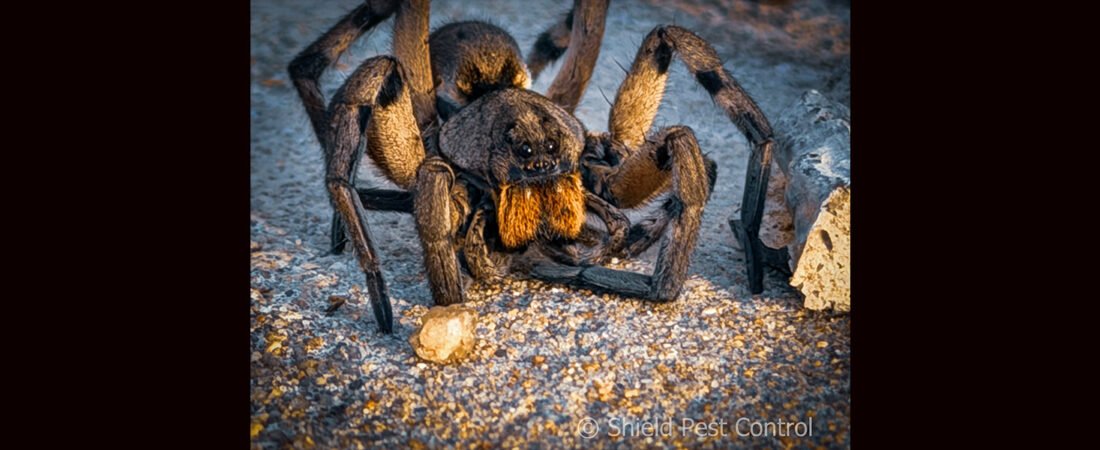
So, when a giant, fuzzy spider with orange jaws wanders onto the driveway, people usually think they’ve stumbled upon a tarantula or something exotic. But surprisingly, this guy us just another member of the Wolf family. We will talk about his full, legal name later, but I like to just call him Hogna. He is the heavyweight member of the wolf spider family, and he almost certainly lives in your back yard.
The Wolf Spider Family
Despite looking completely different from his slender cousins, Hogna is a true wolf spider (Lycosidae). The wolf spider family is vast and diverse, containing thousands of species worldwide. They get their name not because they hunt in packs, but because they are active, highly capable hunters that stalk their prey on foot rather than trapping it in a web.
Hogna’s full name is Hogna carolinensis, often referred to as the “Carolina Wolf Spider.” While smaller species rely on sheer speed to chase down insects in the grass, Hogna takes a different approach.
As the largest wolf spider species in North America, Hogna is built like a stout ambush predator. He prefers to dig vertical burrows in the soil and wait patiently near the entrance, using his dense, gray-brown camouflage to blend seamlessly into rock, gravel, and dirt.
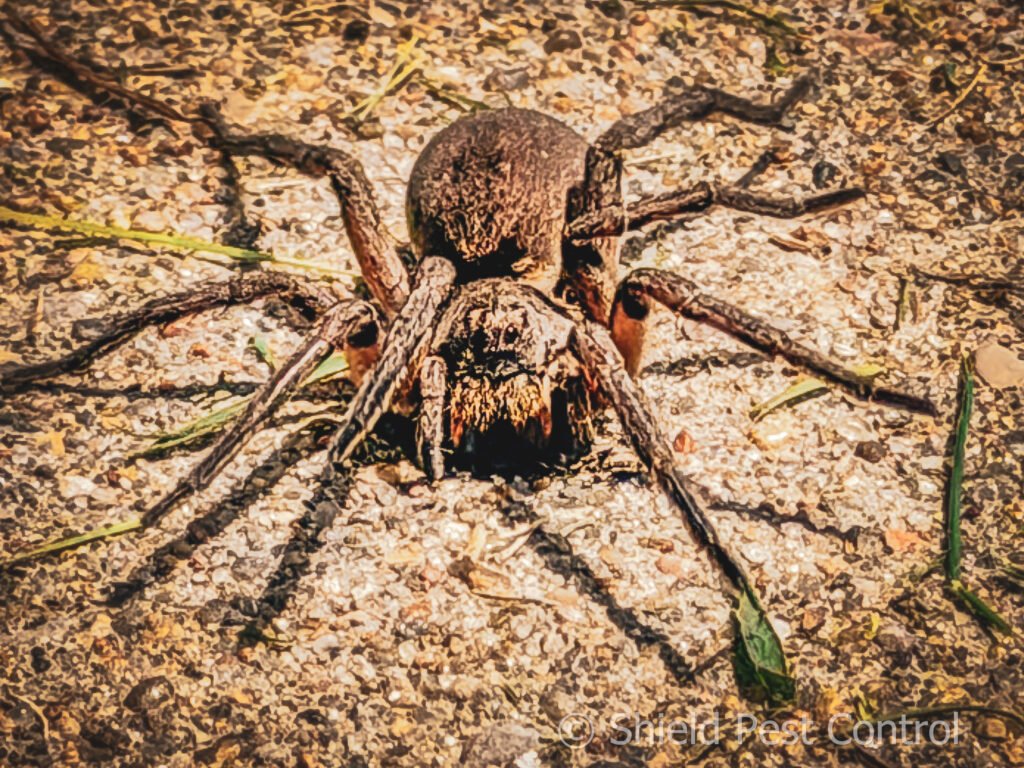
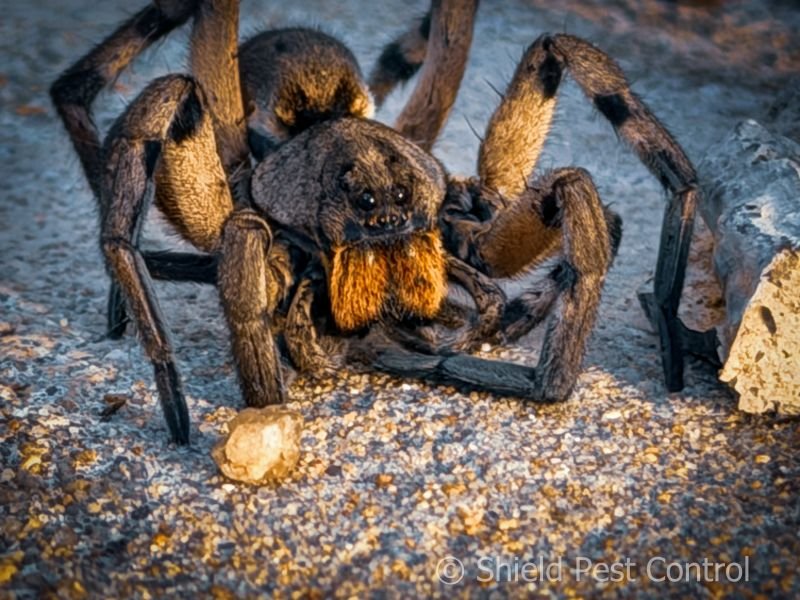
If you ever want definitive proof that both the slender ground-runner and giant Hogna belong to the same family, just look them straight in the face. All wolf spiders share a distinct, unmistakable eye layout: four small eyes in a straight line across the bottom, two larger, forward-facing primary eyes in the center, and two smaller eyes set further back. This combination of eyes and the brown “mustache” give Hogna a distinct looking face. In fact, when you see him up close, he’s really not all that creepy looking is he?
Does Hogna’s Diet Include Brown Recluses?
Have you heard the rumor that Wolf spiders kill Brown Recluses? Well, the rumors are true. Hogna is an absolute machine when it comes to natural pest control around your yard. His nightly diet consists of crickets, beetles, roaches, grasshoppers, and more.
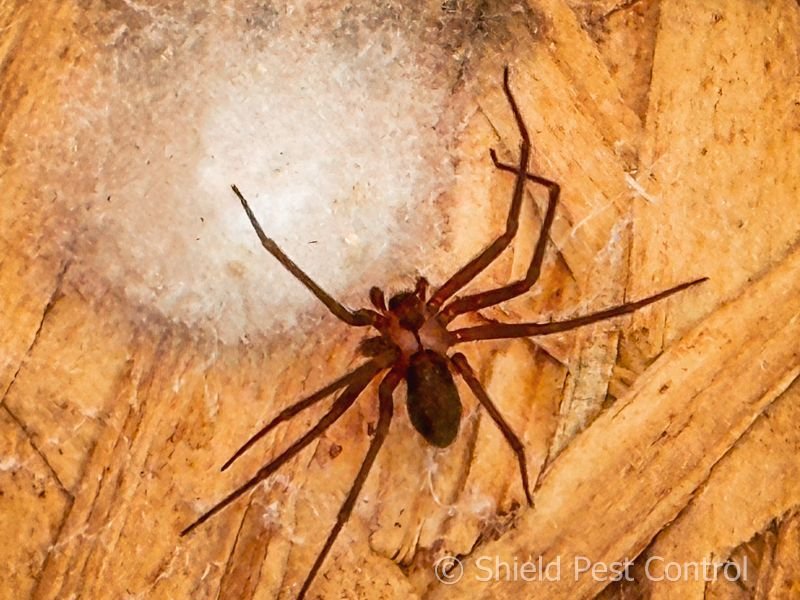
Because of his size, strength, and heavy-bodied build, Hogna is also capable of taking down other spiders, including brown recluses.
If a brown recluse crosses paths with a mature Hogna, the wolf spider almost always wins the battle, thanks to his size and dense outer hair that acts like armor against smaller fangs. However, Hogna is an opportunistic hunter rather than a specialist. While he’s perfectly happy to gobble up a brown recluse as a late-night snack, he doesn’t go hunting for them. He prefers burrowing in soil rather than hanging out in dry indoor spaces like attics or closets where recluses like to hide.
Is Hogna Harmful to People?
With his impressive size and hairy legs, Hogna can certainly give anyone a sudden start. But despite his intimidating appearance, Hogna is entirely non-aggressive and is not a threat to humans or household pets.
Like most spiders, Hogna would much rather run away or retreat to his burrow than pick a fight. If he is accidentally pinched, stepped on, or handled roughly, he could bite, however. This can happen if you attempt to pick him up with your bare hands, or lean against him and cause him to feel in danger. His venom however is mild, and while it can hurt when he bites, it is not piousness to humans. For comparison, a bite from a full grown Hogna could feel somewhat like a bee sting.
Should Hogna spiders be exterminated?
The short answer is no, this is not the spider you want to exterminate. Having Hogna around your garden or lawn perimeter is actually a huge benefit! He acts as a quiet, effective bodyguard for your yard. The size of your Wolf Spider population will dictate how effective they are in your yard.
If you start to see these large spiders inside your home, you may have a Brown Recluse or other bug problem that needs addressed.
Keeping the exterior of your home sprayed with a chemical that also acts as a repellent can help keep Hogna and his buddies in your yard, away from your home. This combination helps drive the pests away from your house and into the waiting arms of this furry creature.
If spiders or the insects they feed on are taking over your home, Shield Pest Control Services is here to help. We offer a large coverage area for Southwest Missouri and parts of Eastern Kansas. Our goal is to help reduce the number of pests in your home, for an affordable price. We can evaluate your property, seal foundation entry points, and implement targeted treatments to keep Hogna and other critters outside where they belong!
Looking for reliable spider control or pest management in Nevada, MO? Contact Shield Pest Control Services today.